


How Children & Teens Can Stay Safe Online

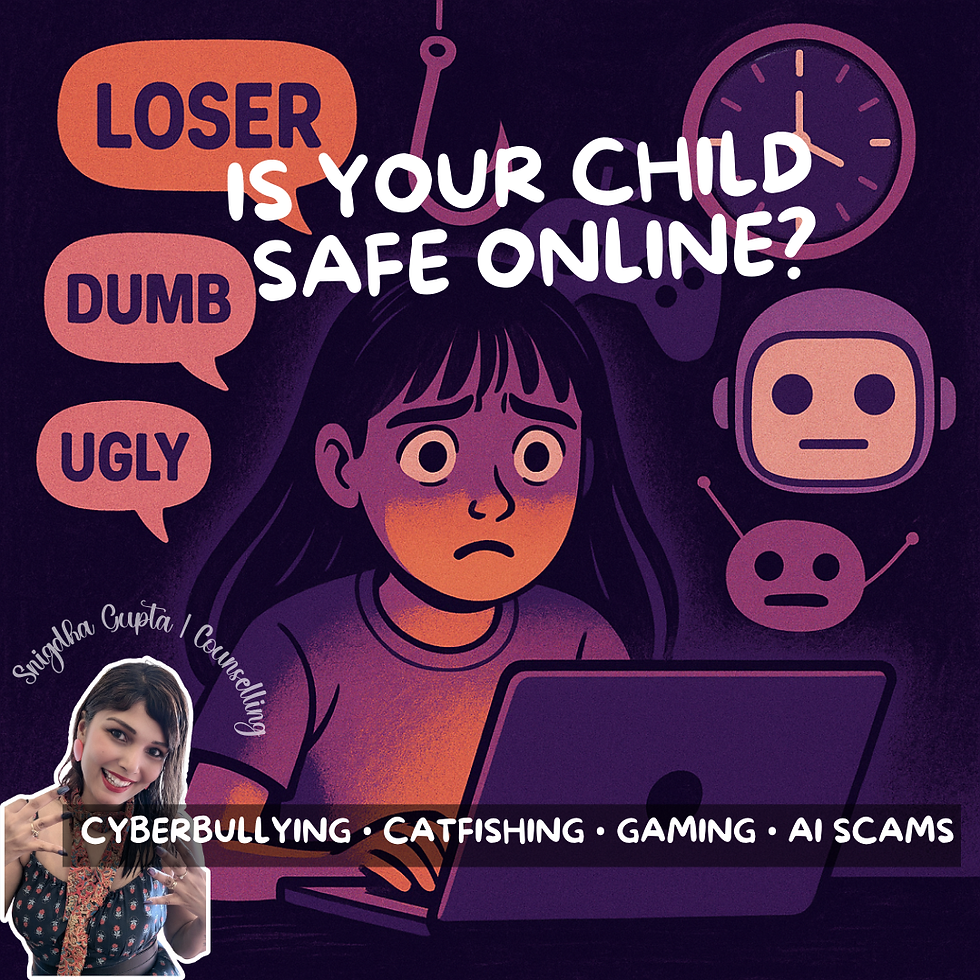
They are going to discover the online world - if not today then tomorrow or even next year. We tell our children: “Be nice online.” We teach them to share, to play fair, to log off when tired. Those are good lessons. But the digital world has evolved so fast that sometimes we don’t see how sharp the edges have become. Bullying, deception, image manipulation - what once seemed like distant dangers are now right in many homes.
Here are things I want every parent, guardian, teen (really, everyone) to know. Because being aware isn’t just half the battle - it’s the frontline.
The Shadows Behind the Avatars

1. Cyberbullying
Bullying used to be face-to-face. But now, a message, a social media post, a screenshot can wound, haunt, spread. Kids don’t just get teased - they’re shamed, humiliated, and it follows them home, into their rooms, via their devices. Mental health takes a hit.

2. Catfishing & Deception
Fake profiles. People pretending to be someone else. Someone kind, fun, interested. Until they’re not. Sometimes for attention. Sometimes for worse: grooming, exploitation, emotional manipulation. Teens (and even adults) have lost money, privacy, trust this way.

3. Gaming Worlds Aren’t Always Safe (Roblox, etc.)
Games are meant to be fun, creative, social. But in many massively multiplayer or user-generated content platforms, not everything is policed well. Stranger chats, inappropriate content, predators who use game features to hide or groom. Lawsuits and reports keep showing this. For instance, Roblox in recent times has been under scrutiny:
researchers found children could still come across sexually suggestive content, unsupervised adult contact.
there have been lawsuits claiming that Roblox “enabled” some abuse, predators used virtual currency (“Robux”) to lure children into unsafe exchanges or explicit content.
Roblox has introduced safety tools, filters, age verification, but even those aren’t perfect.

4. AI, Deepfakes, Image Morphing, and Sextortion
Technology that promises magic has a dark side. AI image tools, “nudify” apps, deepfakes — they let people manipulate someone’s image or likeness to make fake explicit pictures. These can be used for bullying, blackmail, public shaming.
Real stories:
In the U.S., at least one in ten minors reported that classmates used artificial intelligence tools to generate explicit images of other kids. WSYX
A teen named Elijah Heacock died by suicide after being blackmailed with an AI-generated nude image. The perpetrator threatened to share it with friends/family unless money was paid. The image was fake, but the fear was real. CBS News
In Australia, students at a secondary college had formal photos manipulated with AI to create sexually explicit images, distributed online; several teens suspended, support given to victims. News.com.au
In India, influencer “Babydoll Archi” (Archita Phukan) had explicit AI-manipulated content made in her fake identity, distributed widely. It turned into a defamation case, with huge social, mental, legal consequences. Indiatimes
Why “It’s Just Tech” or “Kids Will Be Kids” is Not Enough
Because the harm is real: shame, anxiety, depression, loss of trust, withdrawal.
Because once something is online, control is lost: screenshots, copies, re-uploads.
Because people behind it aren’t always kids; some are very intentional, very predatory.
Because legal protections lag behind technology. Laws in many countries are not fully equipped for deepfake or AI-driven abuse. Privacy, consent, identity theft: these arenas are still being sorted out.

What Adults Should Demand
Stronger regulation on AI tools that allow manipulation of image, voice, likeness.
Platforms (games, social apps) to have safer defaults: stricter age verification, limit interactions with strangers, better content moderation.
Transparent policies & enforcement. When something goes wrong, there should be accountability.
Education in schools: digital literacy, consent, privacy, understanding how tech works (not just how to use it).
The Conversation We Need to Have
Let’s stop treating these as “tech problems” or “kids’ problems.” These are human problems. They’re about trust, respect, dignity. They touch identity, belonging, mental health.
If we (parents, educators, designers, teens) can talk openly and bravely:
about fear, embarrassment, mistakes
about the possibility of being deceived or overwhelmed
about saying “I was wrong”, “I was scared”
then we build resilience. We give children more than protection; we give them voice.
Final Word
Being online is not optional; it’s part of modern life. But it shouldn’t feel like walking through a minefield.
Every child deserves to log on without fear: of being shamed, manipulated, exploited. And every adult around them - parent, teacher, maker of games/apps - owes it to them to build that safer space.


Comments